
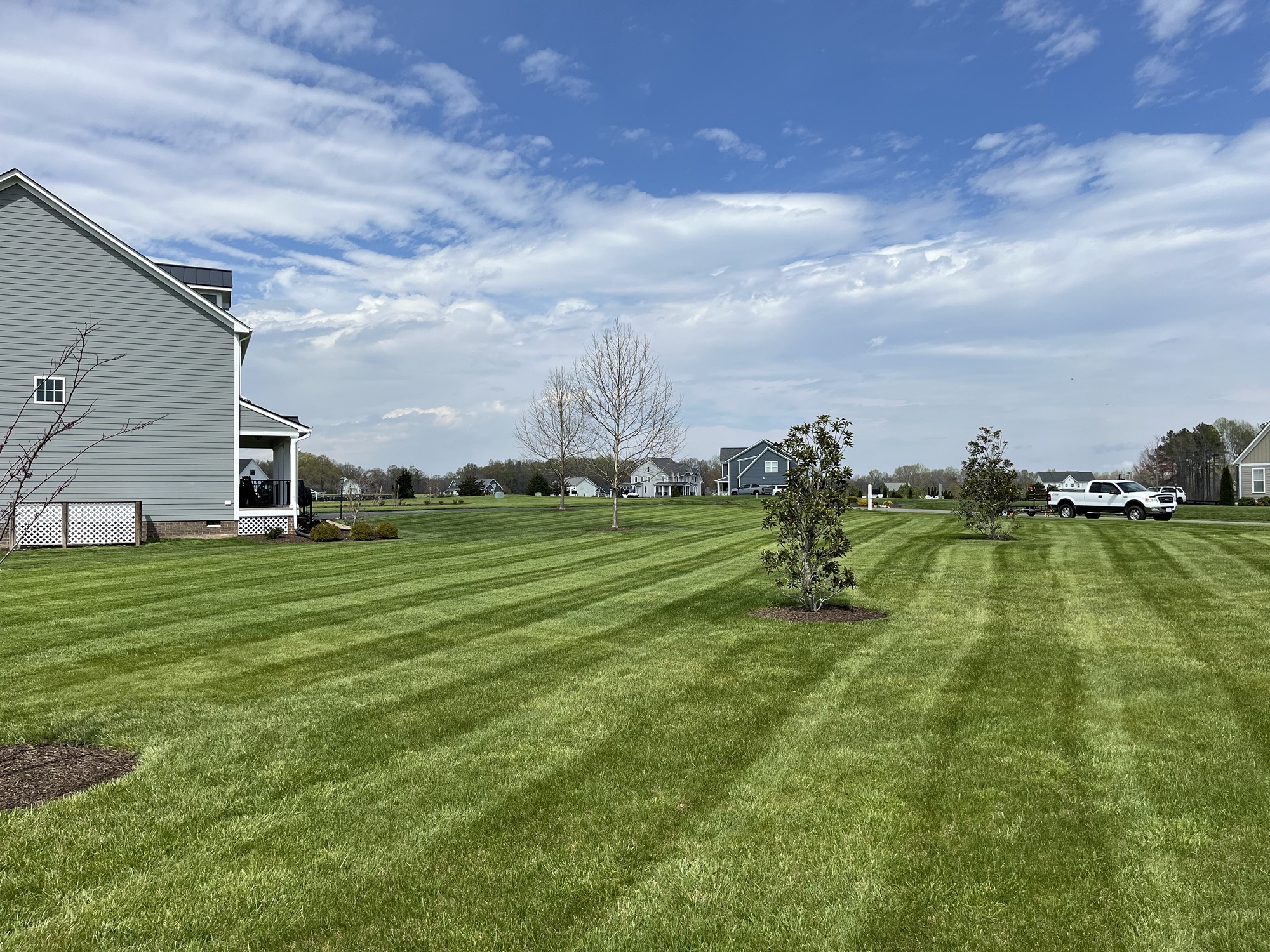
As the summer heat intensifies, maintaining a lush, green lawn can be challenging. However, with the right care and attention, you can keep your lawn looking its best throughout the hottest months. Here are some essential tips for late summer lawn care:
1. Water Wisely
- Early Morning Watering: Water your lawn early in the morning, preferably between 4 AM and 8 AM. This allows the grass to absorb moisture before the heat of the day causes evaporation.
- Deep, Infrequent Watering: Aim for deep watering sessions rather than frequent shallow ones. Watering deeply encourages roots to grow deeper, making your lawn more drought-resistant. Typically, lawns need about 1-1.5 inches of water per week.
- Check Sprinkler Systems: Ensure your sprinkler system is working efficiently. Check for clogged, broken, or misaligned sprinkler heads and adjust them to avoid water waste.
2. Mow Smart
- Adjust Mower Height: Set your mower blades higher during the summer months. Taller grass shades the soil, reducing evaporation and helping to keep the roots cool. A good rule of thumb is to keep grass height around 3-4 inches.
- Keep Blades Sharp: Sharp mower blades make clean cuts, which are less stressful for the grass. Dull blades can tear the grass, making it more susceptible to disease and heat stress.
- Mow in the Evening: If possible, mow your lawn in the late afternoon or evening when temperatures are cooler. This reduces the stress on your grass.
3. Fertilize Cautiously
- Use a Slow-Release Fertilizer: Late summer is a good time to use a slow-release fertilizer. This provides nutrients gradually, reducing the risk of burning your lawn in the heat.
- Avoid High-Nitrogen Fertilizers: High-nitrogen fertilizers can encourage rapid growth that is difficult for your lawn to sustain in hot weather. Look for balanced fertilizers that support overall lawn health.
4. Weed Control
- Spot-Treat Weeds: Use a targeted approach to weed control. Spot-treat weeds with an appropriate herbicide or pull them by hand. Avoid broad-spectrum weed killers that can stress your lawn further in the heat.
- Prevent Future Weeds: Applying a pre-emergent herbicide in early fall can help prevent winter weeds from germinating.
5. Aerate Your Lawn
- Prepare for Fall Aeration: Late summer is an excellent time to start planning for fall aeration. Aerating your lawn helps relieve soil compaction, improves water infiltration, and promotes healthy root growth.
6. Overseed if Necessary
- Fill in Bare Spots: If your lawn has bare or thin areas, late summer is a good time to overseed. Choose a grass seed that is appropriate for your region and lawn type. Water regularly to help new grass establish.
7. Monitor for Pests and Diseases
- Check for Signs of Stress: Keep an eye out for signs of lawn pests or diseases, such as brown patches, wilting, or unusual discoloration. Early detection and treatment are key to preventing widespread damage.
- Use Appropriate Treatments: If you identify a pest or disease problem, use the appropriate treatment method. Follow label instructions carefully to avoid further stress to your lawn.
Conclusion
By following these late summer lawn care tips, you can help your lawn withstand the heat and stay green and healthy. Regular maintenance, careful watering, and mindful mowing will ensure your lawn remains a beautiful and inviting space throughout the summer and into the fall. At EduLawn Care, we offer professional lawn care services tailored to your specific needs. Contact us today for a free estimate and let us help you keep your lawn green and healthy all summer long. Call 804.476.0784 or email edulawncare@gmail.com.




Leave a Reply